
ExecuFeed employs the highly effective Marshall Goldsmith Stakeholder Centered Coaching (MGSCC) methodology that helps successful people make positive lasting change in leadership behavior for themselves, their people and their teams.
Marshall’s process utilizes confidential stakeholder feedback to assist the leader in making the appropriate changes necessary that the team needs for their leader to become more effective with them. It isn’t about the leader or the coach, it’s about the people who work directly for the leader. The coaching engagement typically lasts between 12 -18 months.
Daily Questions
Marshall Goldsmith developed another useful process that is practical and efficient for helping leaders stay focused and on task for the things that they wish to accomplish. It involves a 10 minute phone call every weekday to increase one’s level of accountability around doing the things they said they would do.
Soft Skills
Also known as people skills, are the fundamentals one uses to have great interactions with other people or groups. They include the nuances of effective communication, building relationships and the ability to influence others.
Non-Verbal Communication
Over 80% of human communication is non-verbal. This component determines how impactful your message will be. At ExecuFeed we call these skills “Body English” which is defined by – a movement after throwing, hitting, or kicking a ball, intended as an attempt to influence the ball’s trajectory.
Job Shadowing
ExecuFeed job shadows leaders, live, in their own work environment to observe and coach them in developing their soft-skills, effective utilization of non-verbals and ability to lead and influence others.
Organizational Effectiveness
Workplace Harmony & Organizational Vitality
Successful businesses are systematic and run like a fine tuned watch. Vitality and harmony are increased by using a framework that helps your company function more effectively. It includes things like building a cohesive leadership team, communicating clarity to all employees and having just enough structure to keep things moving forward in a positive direction.
Organizational Culture
Is sort of like the water in the fish tank that the fish need to swim. It describes how people inside the company interact and behave. It encompasses the values that contribute to the unique psychological and social environment of a business. Culture characterizes a set of assumptions that are shared with all employees that guide their behaviors. It also affects how people and teams interact with each other, with stakeholders and with customers. ExecuFeed helps companies to refine and develop their culture to best maximize their unique competitive advantage.
Off site meetings provide a tremendous opportunity for leaders and teams to do very creative and impactful work. The creative energy seems to flow when people travel even a short distance away from the office. Distractions and disruptions are significantly reduced when leaders can get out of the cycle of the day to day grind. When done correctly off sites are not a boondoggle or waste of corporate dollars. The facilitation and structure we provide will make your meeting highly productive.
Process Consultation
If content is “what you do” (make widgets, deliver packages or fuel automobiles) process is “how you do it” (build an assembly line, have a fleet of trucks and planes or have desirable locations for gasoline or charging stations). The process of how you do things critically impacts the content of what you do. ExecuFeed helps design processes and workflow that make your content (i.e. your product or service) shine.
Experience Design (Experiential)
People (i.e customers and employees) remember experiences. When someone says, it truly was an experience, it indicates that it was exciting, impactful and will be remembered for a very long time. Anchors like photographs, locations, songs and fragrances can trigger old memories and emotions as if they had just occurred. Have you ever experienced that new car smell? Remembered experiences can be either negative and positive. This is why it is important that your product and or service deliver a highly positive experience. If your customer and employee experience is neutral (neither positive or negative), that can be problematic as well. At ExecuFeed we help you to design memorable multi-sensory positive experiences, so people will remember what you do and tell 100 of their closest friends to come do it too!
Skunkworks
Is a project or product developed by a small subset and loosely structured team of elite people from a larger organization, who get together to do radical design and innovation on said project or product. The work is intended to be done in a unique environment and at a unique location, primarily to help the team escape distractions and routine organizational procedures.
The name skunkworks was coined at Lockheed Martin where Clarence “Kelly” Johnson was working on classified aircraft design at a location near a plastics factory that had a horrible stench. They began answering the internal Lockheed telephone “Skonk Works” from the Al Capp comic strip Li’l Abner. The term skunkworks, which is a Lockheed trademark, is a name organizations commonly use for specialized research and development projects meeting the criteria above. Johnson and his team are famous for developing the U-2 Dragon Lady and SR-71 Blackbird reconnaissance planes, as well as several other aircraft.
Companies that utilize a skunkworks tend to be very serious about research and development for product design and innovation. ExecuFeed assists in skunkworks creation, talent selection, team building and organizational behavior of the group working on the specified project.
Stone Work
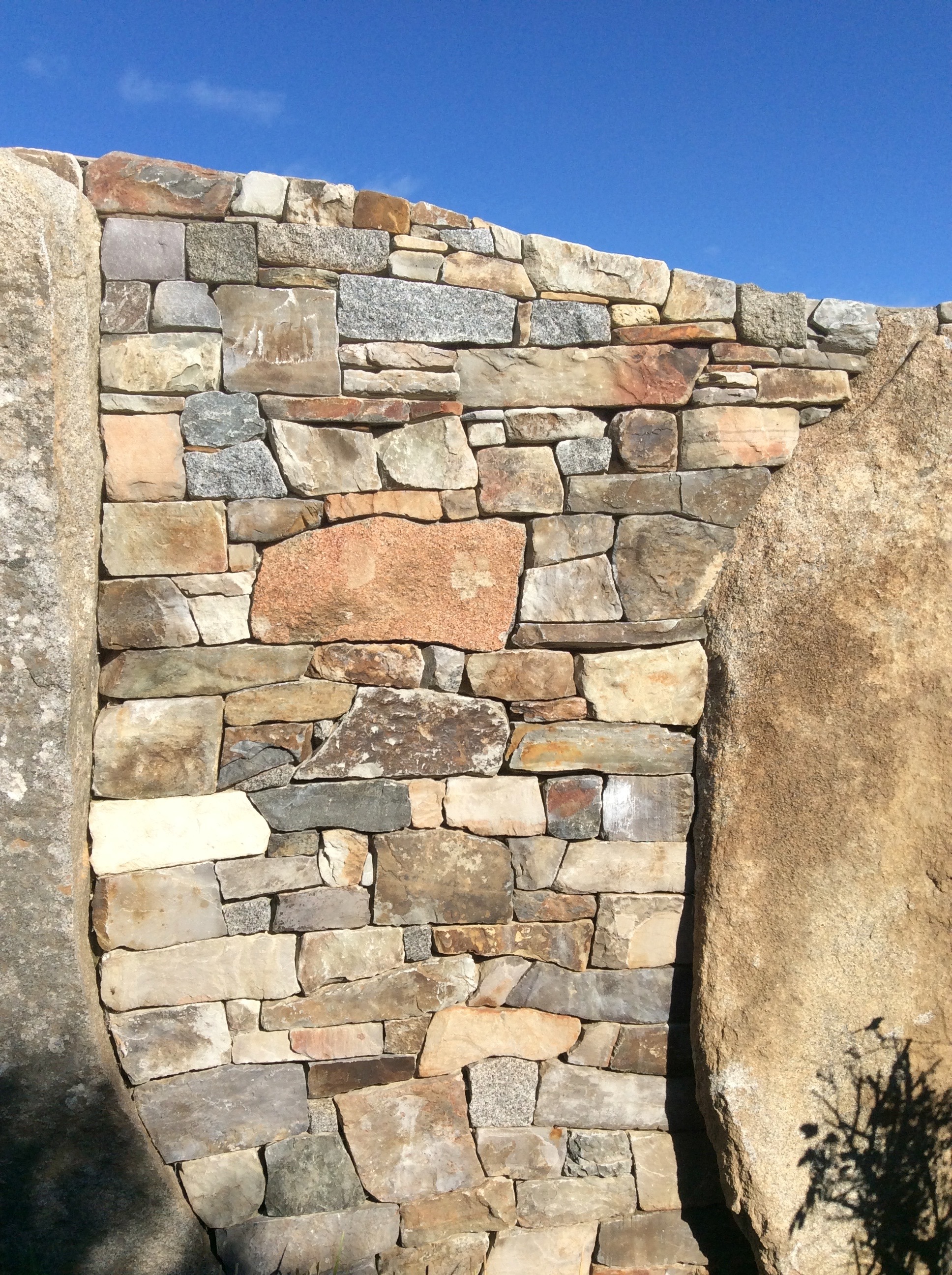
The stone work metaphorically represents how different kinds of people can come together to create different kinds of organizations that can successfully accomplish different kinds of missions.
Much like the pieces of a jigsaw puzzle, the individual stones are limited in what they can do alone. Yet, when in formation with other stones they can accomplish amazing things of great value and function. Each stone is unique and serves a special purpose in the collective big picture of creating something with it’s own unique harmony.
The stone work also depicts how something can be created when one takes the time to painstakingly design and craft something of beauty. This wall began with a purpose, and a plan. After many months and man hours of tedious hard labor the end result is simply stunning. Much like a making a fine whiskey or wine, things of greatness take time to formulate and there are no shortcuts.
Why should your organization and talent pool be any different? The hard work and risk taken initially will likely never be fully understood by the many that will come to enjoy the fruits of the labor. If you do things the right way, the rewards can be remarkable.
Perhaps this is a fitting place to quote the grandfather of modern management, Peter F. Drucker.
“The purpose of an organization is to enable common men (& women) to do uncommon things”
The stone wall and home foundation was designed and built by Mike Leistiko in Walla Walla, Washington. www.wallawallabuilder.com